Malta
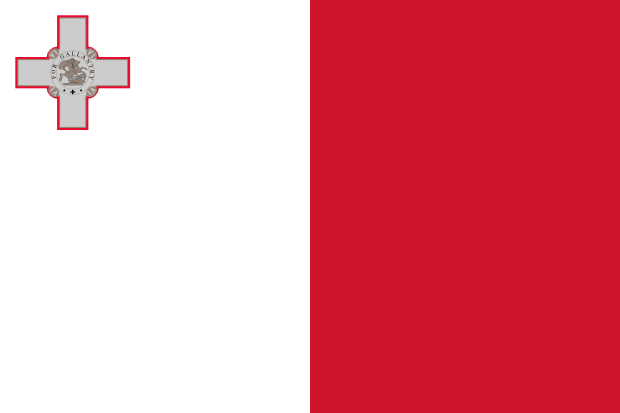
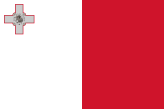
Country flag available in this resolutions
| Icon 32x21 |  |
| Icon 88x59 |  |
Malta
Malta, a small but strategically significant archipelago in the central Mediterranean, represents a fascinating blend of ancient history, diverse cultures, and a vibrant modern economy. Its unique geographical position, nestled between Europe and North Africa, has shaped its destiny for millennia, making it a pivotal crossroads for trade, conquest, and cultural exchange. This island nation, one of the smallest and most densely populated countries in the world, offers a rich tapestry for anyone seeking to understand its enduring appeal.
Geographically, Malta consists of three main inhabited islands: Malta, Gozo, and Comino, along with several uninhabited islets. The landscape is predominantly low-lying, characterized by terraced fields, rocky coastlines, and a distinct lack of natural rivers or lakes. Its Mediterranean climate boasts hot, dry summers and mild, wet winters, making it an attractive destination year-round. The islands’ strategic location, roughly 80 kilometers south of Sicily and 284 kilometers east of Tunisia, has historically been both a blessing and a curse, attracting numerous foreign powers eager to control the central Mediterranean trade routes. The deep natural harbors, particularly the Grand Harbour in Valletta, have been crucial to its historical importance.
Malta’s history is extraordinarily rich and complex, stretching back over 7,000 years. Evidence of prehistoric human activity includes remarkable megalithic temples, such as aar Qim and Mnajdra, which predate the Egyptian pyramids and Stonehenge, marking Malta as home to some of the oldest freestanding structures on Earth. Following these enigmatic early inhabitants, the islands fell under the sway of various powerful empires. The Phoenicians used Malta as a trading outpost, followed by the Carthaginians and then the Romans, who introduced Christianity to the islands, reputedly through Saint Paul’s shipwreck in 60 AD. Subsequent periods saw Byzantine rule, a significant Arab period (870-1091 AD) which left an indelible mark on the Maltese language and culture, and then Norman, Swabian, and Aragonese domination. The most defining era began in 1530 when Emperor Charles V granted Malta to the Knights of St John of Jerusalem, a military order. The Knights transformed Malta, building fortifications, hospitals, and the magnificent city of Valletta, famously withstanding the Great Siege of 1565 by the Ottoman Empire. Their rule ended abruptly with Napoleon Bonaparte’s invasion in 1798, leading to a brief French occupation before the British took control in 1800. Malta became a vital British naval base and a key strategic asset during both World Wars, earning the George Cross for its bravery during World War II. It gained independence from British rule in 1964 and became a republic in 1974, joining the European Union in 2004.
Demographically, Malta is one of the most densely populated countries globally, with a population of approximately 530,000 people residing on just over 316 square kilometers. The official languages are Maltese, a unique Semitic language with strong Romance and English influences, and English, reflecting its diverse historical background. The vast majority of the population is Roman Catholic, which plays a significant role in national identity and public life. In recent decades, Malta has experienced a notable increase in its foreign-born population, contributing to its workforce and cultural diversity, particularly from other EU countries and beyond. This demographic shift has brought both economic benefits and social challenges related to integration and infrastructure.
Economically, Malta has successfully diversified from its historical reliance on military bases and agriculture to a modern, service-based economy. Tourism remains a cornerstone, attracting millions of visitors annually drawn to its historical sites, sunny climate, and clear waters. The financial services sector has grown significantly, establishing Malta as a reputable international finance center due to its favorable tax regime and robust regulatory framework. The iGaming industry (online gambling) is another major contributor, with many international companies choosing Malta as their operational base. Manufacturing, particularly electronics and pharmaceuticals, also plays a role, alongside a thriving maritime industry, including ship repair and registration. Malta’s membership in the European Union and the Eurozone has provided stability, access to a larger market, and has spurred economic growth, though it also faces challenges such as limited natural resources, water scarcity, and pressures on infrastructure due to its high population density and economic expansion. The government continues to invest in infrastructure and education to maintain competitiveness and ensure sustainable growth.
In conclusion, Malta is far more than just a small island nation; it is a microcosm of Mediterranean history, culture, and resilience. From its enigmatic prehistoric temples to its strategic role in global conflicts and its modern-day status as a thriving EU member with a diversified economy, Malta continues to punch above its weight. Its unique linguistic heritage, strong Catholic traditions, and the warmth of its people combine with its stunning natural beauty to create an unforgettable destination and a compelling case study in national development. The challenges it faces, particularly concerning environmental sustainability and managing population growth, are significant, but Malta’s history demonstrates an enduring capacity to adapt and flourish amidst change.
Information about country Malta
Automated text translation, excuse errors, please!
Informations are from the publication CIA The World Factbook.
Country Malta is situated in a location / continent Europe. Malta has an area of 316 km2 and 409 836 residents. The highest point has a height 253 above sea level.. The lowest point is located at the level of 0 above sea level and it is named Mediterranean Sea. System of government is republic and the date of independence 21st September 1964. The capital city is Valletta. Malta has the international abbreviation MT.
Malta - economy
Total gross domestic product (GDP) is 10 890 000 000 $. Total gross domestic product per capita in purchasing power parity is 25 800 $. GDP grows by 2.10 % a year. Inflation (consumer price index) is equal to 2.70 % a year. Malta have 170 500 working-age population (from a total population 409 836 people). Unemployment is at 6.40 %. Malta issued 16.50 % GDP to healt care and 0,70 % GDP to army. The public debt of the country is 70.40 % GDP. The total amount of foreign debt is 48 790 000 000 USD.
Malta - transport and telecommunications
Malta has 3 096 km of roads and 1 airports. There is registered 1 650 ships.
Number of active mobile phones (sim card) in the country Malta is 521 700. Number of active fixed telephone lines is 229 300. Malta has 240 600 internet users, who have the available 14 687 Internet connections. Malta has been assigned a domain first Choose range .mt.
Malta - demography
As suggested above, Malta has 409 836 people. Population growth is in the amount 0.36 % per year. Number of children born per 1000 population per year is 10.31.Every mother has average 1.53 children. The infant mortality rate is 3.65 and maternal mortality 8.00 deaths per 100,000 births. Average estimated life expectancy makes 79.85 years. Mortality is 8.72 people per 1000 population per year.
Malta - energetics
Malta consumes a year 1 991 000 000 kWh of electricity. Annual electricity production is 2 168 000 000 kWh in power plants with a total installed electrical capacity 571 500 kW. Malta exports 0 kWh and imports 0 kWh of electricity per year Energy mix of power generation is as follows: fossil fuels: 99.7 %, nuclear energy: 0 %, renewable: 0.3 %, hydropower: 0.0 %.
Dále doporučujeme:
Tipy na Partnerské webyZajímavé internetové odkazy
Doporučené odkazy na zajímavé weby
Doporučené odkazy a zdroje obsahu
Doporučené internetové odkazy
Countries and flags
Flags
World countries flags
 |
 |
 |
 |
 |
 |
 |
 |
 |
 |
 |
 |
 |
 |
 |
 |
 |
 |
 |