Mauritius

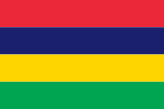
Country flag available in this resolutions
| Icon x |  |
| Icon x |  |
Mauritius
Mauritius, an enchanting island nation in the Indian Ocean, embodies natural beauty, cultural diversity, and economic resilience. Located approximately 2,000 kilometres off Africa’s southeast coast, east of Madagascar, it is renowned for pristine beaches, turquoise lagoons, and a dramatic volcanic interior. The main island, about 1,865 square kilometres, includes Rodrigues, Agaléga, and the Cargados Carajos shoals (Saint Brandon). Its volcanic origin is evident in rugged landscapes and a central plateau, almost entirely surrounded by coral reefs creating calm lagoons. The tropical climate, with warm, humid summers and mild, dry winters, makes it an attractive year-round destination. This idyllic setting forms the backdrop for a vibrant society shaped by centuries of diverse influences.
The history of Mauritius is a tapestry of discovery and colonisation. Uninhabited until the Dutch settlement in 1638, they named it after Prince Maurice of Nassau and introduced sugar cane cultivation. Abandoned in 1710, French rule followed from 1715. Renamed „Isle de France“, it flourished as a strategic naval base and sugar producer, with Port Louis as a vital port. In 1810, the British captured the island, restoring its original name and formally acquiring it in 1814. British rule abolished slavery in 1835, leading to large-scale importation of indentured labourers, primarily from India, profoundly shaping its demographics. Mauritius gained independence from the United Kingdom on 12 March 1968, becoming a republic within the Commonwealth in 1992.
Mauritius boasts a rich, complex demographic profile, shaped by its colonial past and subsequent migrations. With approximately 1.3 million people, it’s a vibrant melting pot of cultures: Indian, African (Creole), Chinese, and European descent. This blend fosters a remarkably harmonious multi-ethnic, multi-religious society. English is the official language, but Mauritian Creole (a French-based patois) is most widely spoken. French is also prevalent, alongside various ancestral languages. Hinduism dominates, followed by Christianity and Islam. The nation prides itself on high literacy rates and a strong emphasis on education, contributing significantly to social stability and progress.
From historical reliance on sugar, the Mauritian economy has remarkably diversified into a robust high-income economy. While sugar production remains, its GDP contribution has diminished significantly. Tourism is a cornerstone, drawing global visitors to its luxury resorts and exquisite beaches. The textile and apparel industry also plays a vital role. Significant growth has occurred in financial services, establishing Mauritius as an international hub known for transparency and ease of doing business. Information and Communication Technology (ICT) and business process outsourcing (BPO) are rapidly expanding. The emerging „Ocean Economy“ focuses on sustainable marine resource exploitation. Proactive government policies, including a Freeport and an investor-friendly environment, have fostered this dynamism and ensured continued prosperity.
Mauritius’s cultural mosaic is vividly expressed in vibrant festivals, diverse cuisine – a delicious fusion of Indian, Chinese, French, and Creole flavours – and its distinctive music and dance, notably the „Sega“, recognised by UNESCO. Preserving its unique natural heritage is vital. The island hosts extraordinary endemic flora and fauna, including rare birds like the Mauritius Kestrel and Pink Pigeon, saved through dedicated conservation efforts. Its coral reefs and marine ecosystems are globally significant. However, like many small island states, Mauritius is vulnerable to climate change impacts. The government promotes sustainable tourism and invests in renewable energy. Looking ahead, Mauritius aims to solidify its position as a bridge between Africa and Asia, leveraging its strategic location and stable environment, striving for a future balancing economic prosperity with environmental stewardship and social equity.
Information about country Mauritius
Automated text translation, excuse errors, please!
Informations are from the publication CIA The World Factbook.
Country Mauritius is situated in a location / continent Africa. Mauritius has an area of 2 040 km2 and 1 313 095 residents. The highest point has a height 828 above sea level. and it is called Mont Piton. The lowest point is located at the level of 0 above sea level and it is named Indian Ocean. System of government is republic and the date of independence 12th March 1968. The capital city is Port Louis. Mauritius has the international abbreviation MP.
Mauritius - economy
Total gross domestic product (GDP) is 19 520 000 000 $. Total gross domestic product per capita in purchasing power parity is 15 100 $. GDP grows by 4.10 % a year. Inflation (consumer price index) is equal to 6.50 % a year. Mauritius have 607 400 working-age population (from a total population 1 313 095 people). Unemployment is at 7.80 %. Mauritius issued 6.50 % GDP to healt care and 0,30 % GDP to army. The public debt of the country is 57.30 % GDP. The total amount of foreign debt is 5 205 000 000 USD.
Mauritius - transport and telecommunications
Mauritius has 2 066 km of roads and 5 airports. There is registered 4 ships.
Number of active mobile phones (sim card) in the country Mauritius is 1 294 000. Number of active fixed telephone lines is 374 600. Mauritius has 290 000 internet users, who have the available 51 123 Internet connections. Mauritius has been assigned a domain first Choose range .mu.
Mauritius - demography
As suggested above, Mauritius has 1 313 095 people. Population growth is in the amount 0.71 % per year. Number of children born per 1000 population per year is 13.78.Every mother has average 1.78 children. The infant mortality rate is 11.20 and maternal mortality 60.00 deaths per 100,000 births. Average estimated life expectancy makes 74.71 years. Mortality is 6.73 people per 1000 population per year.
Mauritius - energetics
Mauritius consumes a year 2 687 000 000 kWh of electricity. Annual electricity production is 2 889 000 000 kWh in power plants with a total installed electrical capacity 885 200 kW. Mauritius exports 0 kWh and imports 0 kWh of electricity per year Energy mix of power generation is as follows: fossil fuels: 75.2 %, nuclear energy: 0 %, renewable: 18.1 %, hydropower: 6.7 %.
Countries and flags
Flags
World countries flags
 |
 |
 |
 |
 |
 |
 |
 |
 |
 |
 |
 |
 |
 |
 |
 |
 |
 |
 |