Liechtenstein

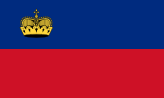
Country flag available in this resolutions
| Icon x |  |
| Icon x |  |
Liechtenstein
Liechtenstein, a minuscule principality nestled in the heart of the Alps between Switzerland and Austria, stands as a testament to resilience, strategic adaptation, and unparalleled economic success. This double-landlocked nation, one of the smallest in the world, often evokes images of picturesque mountains and a tranquil existence, yet beneath its serene facade lies a vibrant, highly industrialized economy and a society that masterfully blends tradition with modernity. Its unique political structure, a constitutional monarchy led by a reigning prince, further adds to its distinct character, making it a fascinating subject of study for anyone interested in European microstates.
Geographically, Liechtenstein is a study in contrasts. Despite its diminutive size, spanning just 160 square kilometers, its landscape is remarkably diverse, dominated by the majestic peaks of the Rätikon mountain range in the east, which form part of the Eastern Alps, and the fertile plains of the Rhine Valley in the west. The Rhine River, forming its western border with Switzerland, is a vital artery, contributing to the agricultural productivity of the lowlands, while the Alpine regions offer breathtaking scenery and opportunities for winter sports and hiking. The capital, Vaduz, is picturesquely situated on the Rhine, overlooked by the prince’s castle, a symbol of the nation’s enduring heritage. This compact geography means that a significant portion of the population lives in close proximity to nature, enjoying a high quality of life with easy access to both urban amenities and pristine wilderness. The country’s highest point, Grauspitz, rises to 2,599 meters, underscoring its Alpine character, even within its small footprint.
The history of Liechtenstein is a compelling narrative of survival and eventual prosperity, particularly considering its strategic location amidst larger, more powerful European states. The principality itself was created in 1719 when Emperor Charles VI elevated the county of Vaduz and the lordship of Schellenberg to the status of a principality, uniting them under the House of Liechtenstein. This act provided the noble family, which had long sought a seat in the Imperial Diet, with a territory directly subject to the Holy Roman Empire. After the dissolution of the Holy Roman Empire in 1806, Liechtenstein gained full sovereignty, joining the Confederation of the Rhine and later the German Confederation. A pivotal moment came after World War I, when the country severed its ties with Austria-Hungary due to the economic devastation and political instability in the region, turning instead towards Switzerland. This shift led to a customs union with Switzerland in 1923, the adoption of the Swiss Franc as its official currency, and a close diplomatic relationship that has proven instrumental in Liechtenstein’s subsequent economic and political stability. This strategic pivot laid the groundwork for its post-World War II transformation from an agrarian society into a highly prosperous financial and industrial hub, skillfully navigating the complexities of international relations while maintaining its neutrality and independence.
Demographically, Liechtenstein presents an intriguing profile. With a population of just under 40,000 inhabitants, it is one of the least populated sovereign states in the world, yet it boasts a remarkably diverse and international community. Approximately one-third of its residents are foreign nationals, primarily from Switzerland, Austria, and Germany, contributing to a vibrant multicultural fabric. This high proportion of expatriates, combined with a significant number of cross-border commuters who travel daily for work, underscores the country’s strong economic pull. The official language is German, though the local Alemannic dialect, called „Liechtensteinisch“, is widely spoken and forms a crucial part of the national identity. The majority of the population adheres to Roman Catholicism, which is recognized as the state religion, though there is religious freedom and a growing diversity of faiths. Despite its small size, Liechtenstein maintains an exceptionally high standard of living, reflected in its impressive life expectancy and robust social welfare system. The population density, while relatively low in the mountainous regions, is higher in the Rhine Valley, where most of the urban centers and economic activity are concentrated.
Liechtenstein’s economy is nothing short of an economic miracle, renowned for its extraordinary per capita wealth and its successful transition from an agricultural backwater to a global financial and industrial powerhouse. Often mistakenly perceived solely as a tax haven, its economic strength is actually rooted in a highly diversified and export-oriented industrial sector, alongside its sophisticated financial services industry. Manufacturing, particularly in areas like precision engineering, dental technology, and specialized machinery, accounts for a significant portion of its GDP and exports. Companies like Hilti (construction tools) and Ivoclar Vivadent (dental products) are global leaders in their respective fields, demonstrating Liechtenstein’s capacity for innovation and high-quality production. The financial sector, including banking, asset management, and insurance, remains a cornerstone of the economy, offering specialized services to international clients. Historically, low corporate taxes attracted foreign capital, though the principality has significantly reformed its tax laws to comply with international standards and combat money laundering, demonstrating its commitment to transparency. Membership in the European Economic Area (EEA) since 1995 provides access to the EU’s single market, further boosting its trade and economic integration, while its customs union and monetary union with Switzerland provide a stable economic framework. Tourism, though smaller than other sectors, also contributes to the economy, drawing visitors with its stunning Alpine landscapes, cultural attractions, and charming towns.
Culturally and socially, Liechtenstein embodies a unique blend of traditional Alpine customs and a forward-looking, cosmopolitan outlook. The monarchy plays a significant role in national life, with Prince Hans-Adam II and his son, Hereditary Prince Alois, actively involved in governing, though the country operates as a parliamentary democracy where citizens hold substantial power through direct democracy mechanisms like referendums. This balance between monarchical authority and popular sovereignty is a defining feature of its political landscape. Community life is strong, characterized by numerous clubs, associations, and traditional festivals that preserve local heritage, such as the „Funkenfeuer“ (bonfire) in spring or national holidays celebrated with princely receptions. The country boasts a high level of education, with a strong focus on vocational training and tertiary education, often pursued abroad. Despite its small scale, Liechtenstein offers a rich cultural scene, including the Kunstmuseum Liechtenstein, which houses a notable collection of modern and contemporary art, and the National Museum, preserving the principality’s history and folklore. This combination of a stable political environment, a robust economy, and a strong sense of community contributes to an exceptionally high quality of life, making Liechtenstein a truly distinctive and remarkable nation on the European stage.
Information about country Liechtenstein
Automated text translation, excuse errors, please!
Informations are from the publication CIA The World Factbook.
Country Liechtenstein is situated in a location / continent Europe. Liechtenstein has an area of 160 km2 and 36 713 residents. The highest point has a height 2 599 above sea level. and it is called Vorder-Grauspitz. The lowest point is located at the level of 430 above sea level and it is named Ruggeller Riet. System of government is constitutional monarchy and the date of independence 23rd January 1719. The capital city is Vaduz. Liechtenstein has the international abbreviation LS.
Liechtenstein - economy
Total gross domestic product (GDP) is 5 003 000 000 $. Total gross domestic product per capita in purchasing power parity is 143 900 $. GDP grows by -0.50 % a year. Inflation (consumer price index) is equal to 0.30 % a year. Liechtenstein have 34 334 working-age population (from a total population 36 713 people). Unemployment is at 2.80 %. The total amount of foreign debt is 0 USD.
Liechtenstein - transport and telecommunications
Liechtenstein has 380 km of roads, 9 km of railway lines. The total length of waterways (navigable rivers, canals, etc.) is 28 km.
Number of active mobile phones (sim card) in the country Liechtenstein is 37 000. Number of active fixed telephone lines is 19 600. Liechtenstein has 23 000 internet users, who have the available 9 969 Internet connections. Liechtenstein has been assigned a domain first Choose range .li.
Liechtenstein - demography
As suggested above, Liechtenstein has 36 713 people. Population growth is in the amount 0.80 % per year. Number of children born per 1000 population per year is 10.76.Every mother has average 1.69 children. The infant mortality rate is 4.39 .Average estimated life expectancy makes 81.50 years. Mortality is 6.78 people per 1000 population per year.
Liechtenstein - energetics
.
Countries and flags
Flags
World countries flags
 |
 |
 |
 |
 |
 |
 |
 |
 |
 |
 |
 |
 |
 |
 |
 |
 |
 |
 |